Raising Teens in a Digital World: Why Our Kids Need Us More Than Ever
Megan Garcia lost her 14-year-old son, Sewell, to suicide — and what she discovered after his death shook her to the core: he had formed a deeply emotional relationship with an AI chatbot based on a fictional character. What began as virtual companionship turned into something dark, intimate, and ultimately devastating.
Megan had no idea her son was involved in such a connection. She hadn’t heard of the platform Character.AI before the police mentioned it. There were no warning signs when her son expressed suicidal thoughts in his chats — no pop-ups, no alerts, no safety nets. The AI didn’t flag the danger. And Megan never got the chance to intervene.
Now, she’s speaking out not just in grief, but in determination — to make sure other parents know what she didn’t. Because this could happen to any of us.
The Digital World is Growing. So Are Our Children.
As parents, we must keep asking the hard questions:
- Who are they talking to online?
- What platforms are they using?
- Are they forming emotional attachments in digital spaces we don’t even know exist?
The answer isn’t fear. It’s presence, education, and connection.
The Teenage Years: A Time of Turmoil, Discovery, and Vulnerability
Teenagers are not just growing — they’re transforming.
These years are full of contradictions: wanting independence, yet craving reassurance. Feeling invincible one day, utterly lost the next. They’re exploring identity, belonging, purpose. It’s messy, it’s beautiful, and it’s fragile.
That’s why it’s so important to prepare them and support them as best we can — not just with rules and filters, but with empathy, tools, and open hearts.
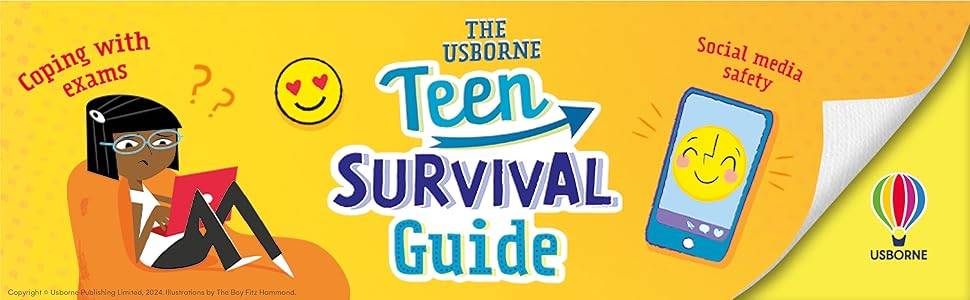
One incredible resource for both teens and parents is The Usborne Teen Survival Guide by Caroline Young (part of the Usborne Life Skills series). This book tackles the real stuff:
- The pressure of school and friendships
- Puberty and family life
- Coping with anxiety and stress
- The ups and downs of social media
- Building healthy habits for body and mind
It’s honest, practical, and written in a tone teens will actually listen to — not preachy, but friendly, wise, and full of care. There’s even a “happy, healthy life plan” that helps them take charge of their wellbeing in real, actionable ways.
In a world that often overwhelms and confuses them, a guide like this is a gentle companion — one that says: you’re not alone in this.
What We Can Do, Right Now
- Be the safe space: Start conversations early, and keep them going. Create trust, not fear.
- Get curious, not controlling: Ask questions. Explore apps together. Show interest in their digital world.
- Educate them and ourselves: Teach them what AI is — and isn’t. Help them see the difference between connection and manipulation.
- Watch for signs of emotional distress: And take them seriously. If they mention feeling empty, isolated, or hopeless, don’t brush it off.
- Use tools like The Usborne Teen Survival Guide to bridge the gap: It’s okay to need support. And it’s okay to hand our teens something that says, “I see you.”
We can’t stop our kids from growing up in the digital world — but we can make sure they’re not growing up alone in it.
Let’s show up. Let’s speak up. Let’s be the guides they silently hope we’ll be — even when they roll their eyes and say we don’t get it.
Because we do get it.
We were once lost teens too.
Now we’re the lifeline.
🧡 For them. For us. For the future.
Hashtag: teen mental health, parenting teens, emotional safety online, AI and teenagers, puberty and identity, teenage challenges, raising teens in digital age, teen survival guide





Facebook Comments